
Skip to content

Written quotesLocal technicians

Austin, TX (512) 555-0171
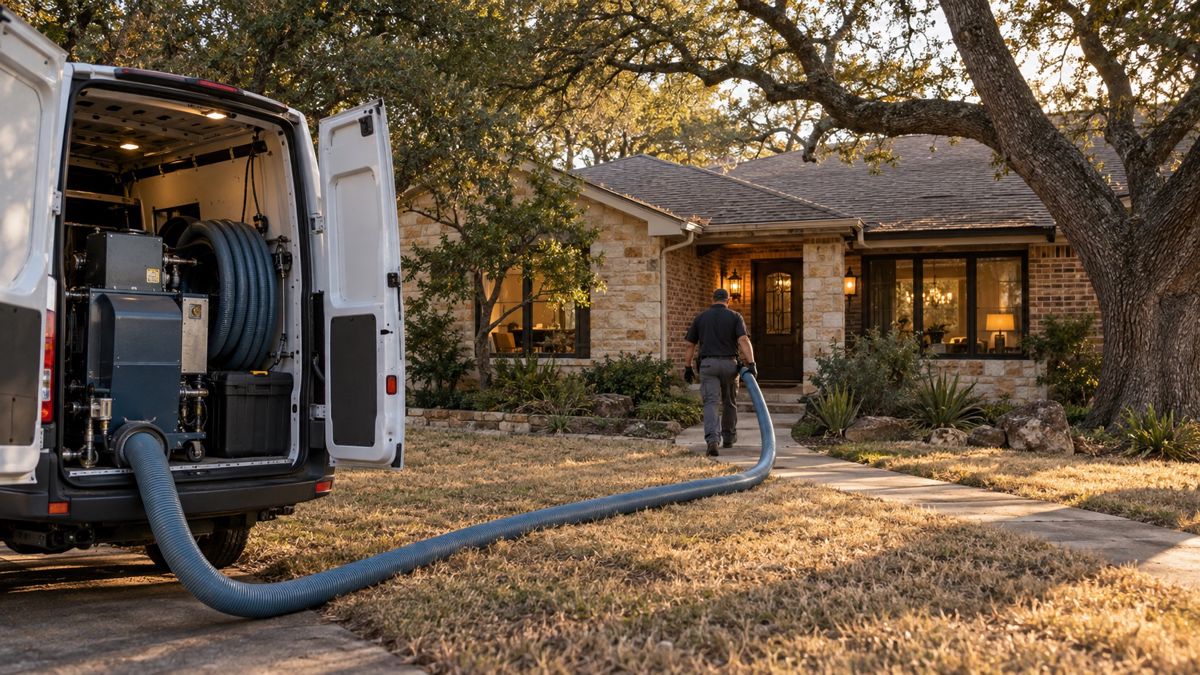
Austin ranch home with a duct cleaning hose running to the door

I-35 corridor and Brushy Creek homes

Air duct cleaning in Round Rock, TX

Duct, dryer vent, coil and commercial exhaust cleaning for Round Rock. Send your quote request and we will confirm availability and the next step.

  • Written quote before work starts
  • Ducts, dryer vents, coils and blowers
  • Homes and small commercial spaces

Step 1 of 3

What do you need?

Written quotes
Local technicians
Photo proof of the work
Tidy, contained process

What Round Rock duct systems usually collect

Round Rock grew up along the I-35 corridor north of Austin, and a large share of its housing comes from big subdivisions with repeating floor plans. Homes built in the same era often share the same duct layout: a central air handler, flexible duct running through the attic, and ceiling registers in every room.

That repeating pattern produces repeating problems. Flex runs can sag or kink, boots can pull loose from the ceiling, and return grilles gather fine grit pulled in from nearby fields and construction. Soil around the city ranges from limestone to dark clay, and dry windy stretches lift a surprising amount of it. We start every visit by looking at how air actually moves through your particular home.

Driving, parking and attic access in Round Rock neighborhoods

Most Round Rock jobs are two-story or single-story homes with an attic air handler or a closet unit in the hallway. Streets in the newer subdivisions are narrow, and driveways fill up quickly, so we ask where the crew can park the van and run hoses and the large vacuum line before the day begins.

People who commute along I-35 and SH-45 often book around work hours, and we try to plan visits so someone is home only for the walkthrough at the start and end. If your attic hatch sits in a closet or garage ceiling, clear a path in advance. A blocked hatch is the most common reason a visit takes longer than it should.

Services we offer to Round Rock customers

These are the five services covered on this site, with a note on how each tends to fit a Round Rock property.

No two systems are alike, even in neighboring houses from the same builder. These general factors shape the plan and the quote:

  • System size. A home with two air handlers and many returns takes longer than a small single-system house.
  • Duct material. Flex duct, metal trunk lines and duct board each respond differently to agitation and suction.
  • Condition. Light dust is a quick job, while construction debris or pet hair packed into returns takes more time.
  • Access. Tight attics and hidden plenums add effort.

We explain which of these applied when we hand over the written quote.

Preparing the house and thinking about insurance

Preparation is simple. Move pet food and small items away from registers, make sure someone can reach the thermostat, and clear space around the air handler. If a family member has asthma or allergies, tell us when you book so we can talk about sequence and ventilation during the visit.

Homeowner policies usually do not pay for routine duct cleaning, but they may be involved when water damage or a covered loss has affected the system. If you are filing a claim, keep photos and written notes from the visit. Texas has state rules for mold assessment and remediation, so we will point out when a finding needs a different kind of professional before any cleanup begins.

How a Round Rock quote request works

Fill in the short form or call (512) 555-0171. We serve Round Rock, but the crew is not stationed there, so your request is how we confirm availability.

  1. Tell us the type of home, the number of returns and where the air handler sits.
  2. Mention anything you noticed, such as dust at registers or a musty smell.
  3. We reply, confirm whether we can come to your address, and ask follow-up questions.
  4. A written quote reaches you before the crew schedules anything.
  5. We agree on a day and the crew arrives with the equipment.

Questions are welcome at any step, and sending the form does not commit you to anything.

Step 1 of 3

What do you need?

Questions about Round Rock

Do new Round Rock homes need duct cleaning?

Sometimes. Construction dust, drywall powder and wood scraps can end up in ducts during the build, especially when the system ran before the house was finished. If you see debris at the registers or dust blowing out on the first startup, a cleaning is worth considering. Otherwise, it is reasonable to wait and have the system looked at when you notice a change.

Why do my registers get dusty so quickly in Round Rock?

Several things can cause it. Leaky return ducts pull attic or garage air into the system, loose boots let dust slip into the room, and a filter that does not fit snugly lets fine particles bypass it. Open land and construction nearby add to the load. We look at where the dust enters before deciding whether cleaning alone will help or sealing is also needed.

Can you clean ducts and the dryer vent in the same visit?

Yes, many customers combine them. The tools are different, but both jobs involve attic access and the same crew can do both while set up at your address. Mention both when you request a quote so the visit is scheduled with enough time, and the written quote lists each item separately so you can see what is included.

Is the air in my attic going to make cleaning harder?

Hot attics slow the work and the crew takes breaks and schedules around the hottest part of the day when possible. Heat can also soften flexible duct and make old tape brittle. We check connections as we go and tell you if a joint has come loose or a section is damaged, because cleaning cannot fix a broken duct.

How do I know whether a cleaning actually worked?

Ask the crew to show you the before and after condition inside the main trunk and a few runs, and to explain what they found. You should also notice cleaner registers and less dust settling on furniture over the following weeks. A reputable service will be open about limits, including parts of the system that could not be reached.