
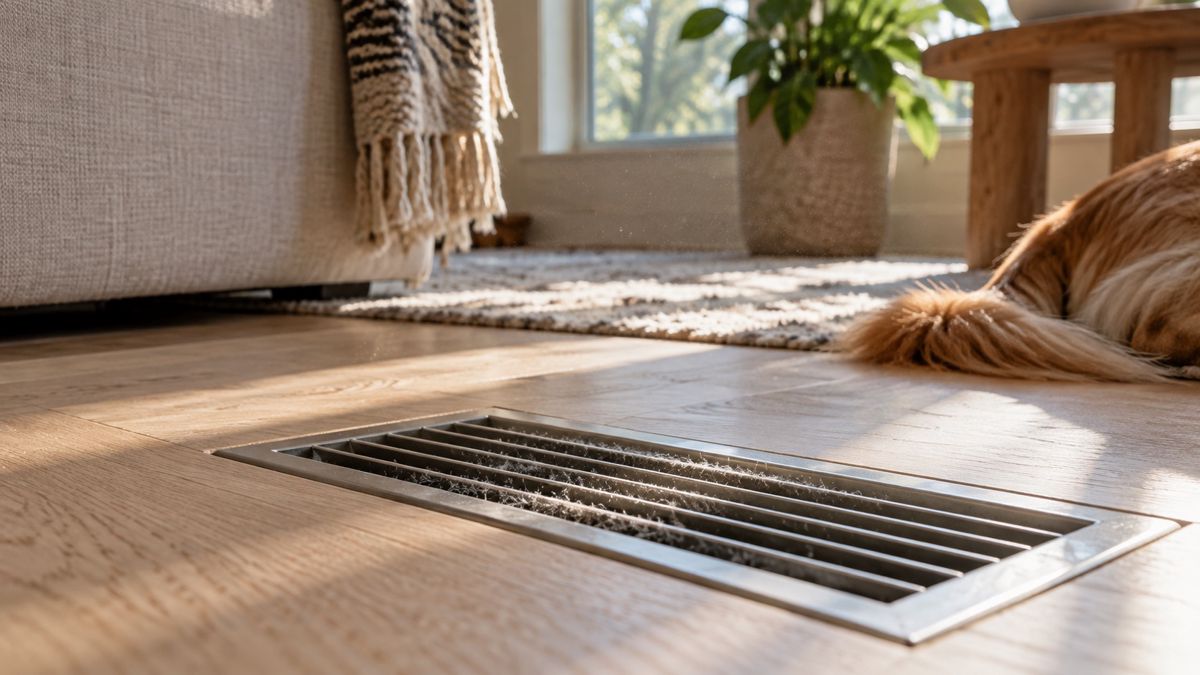
Most Austin homes do not need their ducts cleaned every year. A better answer is to clean when there is a reason, such as visible dust at the registers, a remodel, a pest problem or mold. Between cleanings, a good filter routine does most of the work. The rest of this post explains how to tell the difference.
Is there a set schedule for duct cleaning?
No single schedule fits every house. You will see claims online of every one to three years, but the EPA says there is no proof that routine duct cleaning prevents health problems, and that dust in ducts does not by itself show a problem. What it does suggest is cleaning when ducts are visibly moldy, infested with pests or clogged with dust and debris.
That is a sensible starting point for an Austin home. Treat the calendar as a loose guide and let what you see decide. Many households go several years between visits and do fine. Others, with heavy pet shedding or a recent build, need one sooner.
What makes Austin ducts get dirty faster?
Austin has a few local habits that load a system up. Mountain cedar pollen peaks in winter, oak pollen arrives in spring and ragweed and grass pollen follow later. During dry spells and drought, fine limestone dust drifts in through attic vents and door gaps. And the cooling season is long, so your air handler moves a huge volume of air from spring into fall.
- Pollen seasons: filters clog faster in winter than many owners expect.
- Dust and drought: fine dust settles in returns and on filters.
- Long cooling season: more runtime means more air through the same ducts.
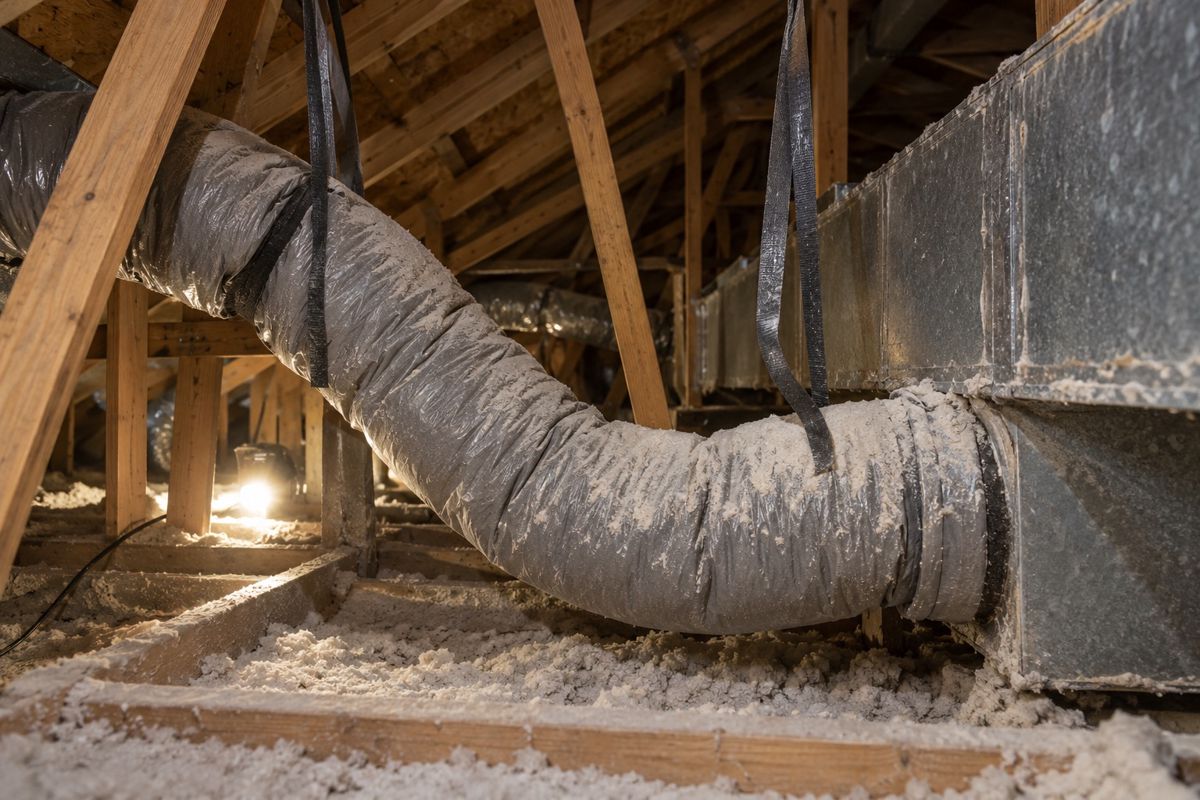
- Attic heat: flex duct in a hot attic can sag, split or loosen at the joints.
None of this means you must clean. It means that checking is worth doing.
Which situations call for cleaning sooner?
Some events are good reasons to book a visit before any schedule says so.
Remodels and new builds
Drywall dust and sawdust can enter open ducts during construction. Austin has a lot of new building in suburbs like Round Rock, Pflugerville, Buda and Kyle. If the registers were not covered during the build or a remodel, it is worth having someone look inside.
Pets
Dogs and cats shed all year, and hair and dander collect at return grilles and low returns. Households with several pets often see more buildup on filters and around vents.
Pests
Rodents, insects or birds in an attic duct leave droppings, nesting material and odors. That is one of the reasons the EPA lists for cleaning, and the duct itself may need repair first.
Moisture and mold
A musty smell, dark growth near registers or a leak near the air handler should be looked at promptly. Fix the water source first, then clean. Texas has rules for mold assessment and remediation, so for larger problems ask what applies before work starts.
What can you do between cleanings?
Most of the benefit comes from simple habits.
- Change the filter on a schedule that fits the season, and check it monthly in winter and during heavy use.
- Keep returns and registers clear of furniture, rugs and clutter.
- Vacuum around registers and wipe the grilles now and then.
- Seal gaps and keep the attic access closed so dust does not drift in.
- Look at the air handler and condensate line during the summer, since a clogged drain can lead to leaks.
A cleaner filter helps your system breathe. It also keeps more dust from reaching the coil and blower, which are separate from the ducts. If those parts are dirty, read about blower and coil cleaning as well.
What does a duct cleaning visit involve?
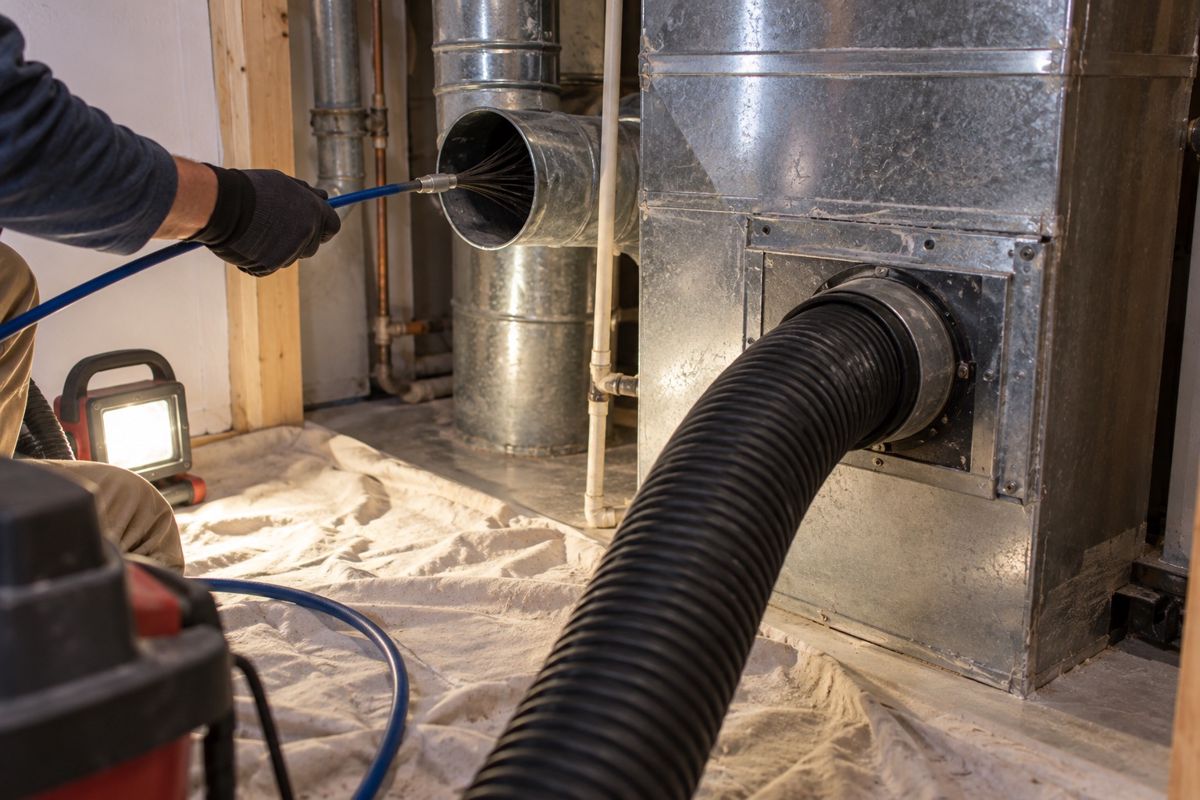
A crew attaches a strong vacuum to the main trunk, keeps the system under negative pressure and cleans each branch with brushes and air tools. Registers come off to be cleaned, and the crew closes up the access points. A typical job on a single-system house takes a few hours, but time varies with the size of the home, the attic access and the condition of the ducts.
Price depends on the number of systems, the number of supply and return openings, how hard the attic or closet is to reach and how heavy the buildup is. Extras such as cleaning the blower and coil or treating mold change the quote too. Ask any company for a written quote, and ask what it includes. Be careful with very low fixed prices given over the phone before anyone has asked about your home.
What should you ask a duct cleaner?
Whoever you hire, a few questions will tell you a lot. Ask to see their licence and insurance where required, and ask for the quote in writing. Ask how they clean, including whether they use negative pressure and agitation, and what they do to protect your floors. Ask whether the quote covers all returns and registers. Be wary of anyone who promises health results or wants to clean everything without looking first.
Also ask what happens if they find a problem outside their work, such as a loose duct, wet insulation or a failing blower. A good crew tells you and leaves the choice to you.
So, how often should you clean?
For most Austin homes, think in terms of signs, not dates. If you see dust blowing from vents, you have just finished a remodel or moved into a new build, pests have been in the attic or you smell something musty, call for a look. Otherwise, a steady filter routine and an occasional check of the registers are enough.
If you are ready to have someone take a look, our air duct cleaning page explains the job, and you can call (512) 555-0171 to ask about your system. We will tell you honestly if your ducts can wait.